
Will Sleep Apnea Kill You? 5 Risk Factors to Watch
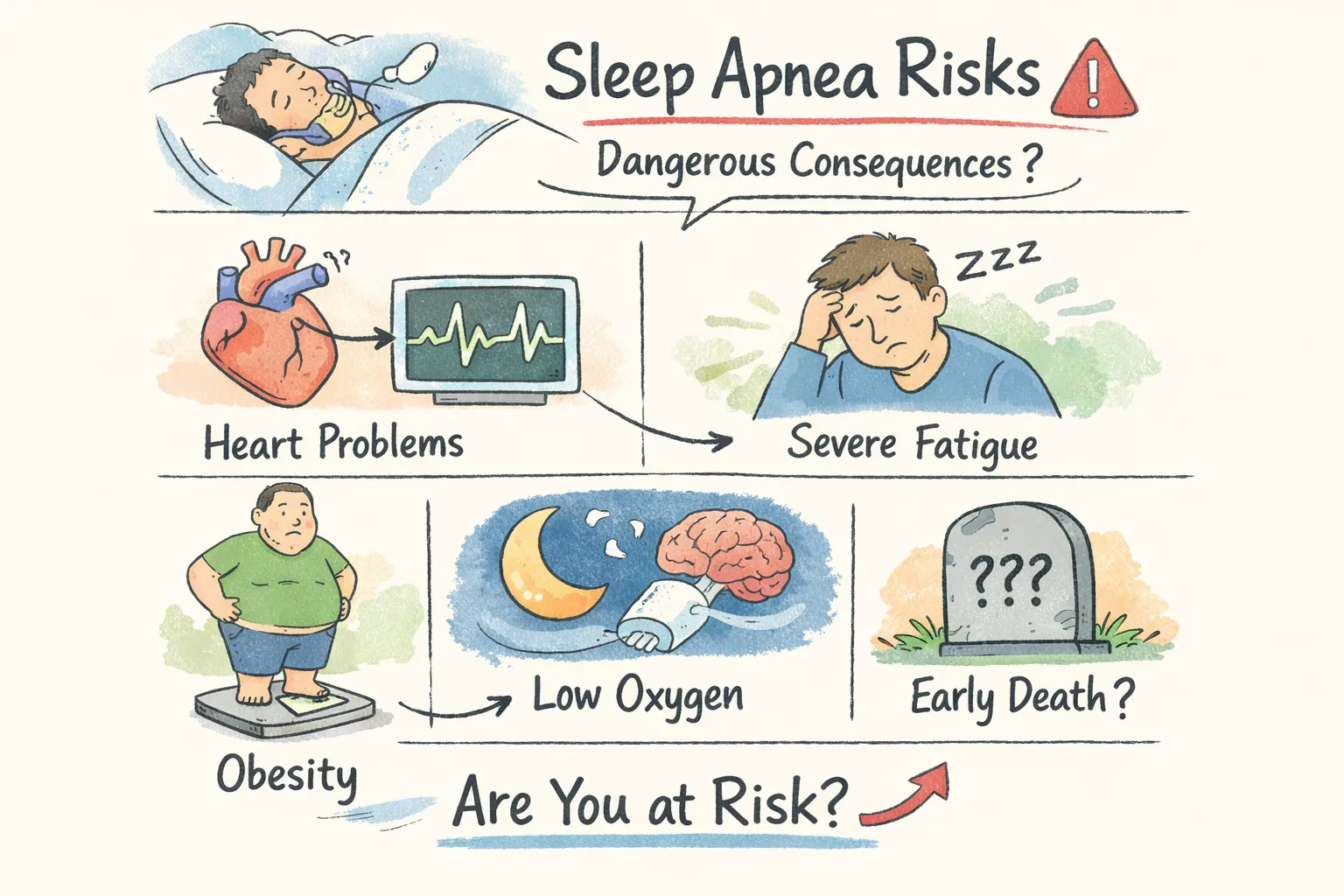
Will sleep apnea kill you? Not necessarily. Severe obstructive sleep apnea (OSA) does increase the risk of cardiovascular death and has been linked to higher mortality in large studies, but those group-level numbers need context. This article explains how clinicians translate research into personal risk estimates and when you should seek prompt evaluation so you can make clear, practical decisions about care.
Severity shapes risk. Clinicians use the apnea-hypopnea index (AHI) to classify mild (5–14), moderate (15–29), and severe (30 or more) OSA, and research repeatedly points to AHI ≥30 and sustained nocturnal desaturation as the thresholds most associated with worse outcomes. Measures of oxygenation, such as mean overnight SpO2 and time spent below 90 percent, often add independent risk information. Reviewing both event counts and overnight oxygen helps you and your clinician decide how urgent testing or treatment should be.
What you need to know
If you want a quick overview when asking "will sleep apnea kill you," start here. Severity and oxygen metrics drive most risk calculations, but specific symptoms and other health conditions change the picture. For a straightforward checklist you can use while deciding what to do next, see our self-assessment guide.
Will sleep apnea kill you: how clinicians assess mortality risk
When people ask "will sleep apnea kill you" they want a clear answer rather than a string of alarming statistics. Clinicians separate relative measures, like hazard ratios, from absolute risk because a twofold relative increase can mean very different things depending on a person's baseline risk. Estimating individual risk requires combining study findings with age, existing heart disease, and overall health status.
What the research actually shows about obstructive sleep apnea and death
Severe OSA produces the clearest signals in observational research. Adjusted hazard ratios for all-cause death in people with severe disease commonly fall between roughly 1.4 and more than 4, depending on the cohort and which variables were controlled. In some high-risk clinic samples, five- to fifteen-year mortality estimates have ranged from about 8 percent up to nearly 19 percent, showing that severe OSA can contribute to earlier death when other risks are present. Several systematic and cohort analyses underline these associations across diverse populations (key cohort evidence).
Cardiovascular death and sudden cardiac death follow a similar trend. Several large cohorts report roughly a twofold rise in sudden cardiac death, and pooled estimates for major cardiac outcomes often fall near 1.7. Studies comparing untreated patients sometimes find larger effects, with hazard ratios above 3 in certain subgroups, and differences between studies reflect variable CPAP exposure, clinical sampling, event definitions, and follow-up time. Clinical summaries and press reviews have highlighted the link between severe OSA and an elevated risk of sudden cardiac death in selected datasets.
Overall, severe untreated OSA increases mortality risk while findings for mild or moderate disease are more variable and usually hinge on additional health problems. Treatment and adherence, appear to reduce much of the excess risk seen in untreated groups. The next section outlines the physiologic links from nighttime breathing events to daytime cardiovascular danger.
How OSA can lead to sudden cardiac death or other cardiovascular events
Each apnea and deep oxygen drop triggers a short-term cascade that stresses the heart. Breathing pauses can lower oxygen, provoke arousals, and generate large sympathetic surges with sudden rises in heart rate and blood pressure at vulnerable moments. That combination of intermittent hypoxia and sharp cardiovascular swings can precipitate ischemia or life‑threatening arrhythmias, which helps explain clustering of sudden cardiac events in people with severe sleep-disordered breathing.
Night after night, the same pattern remodels blood vessels and metabolism. Intermittent hypoxia promotes inflammation, endothelial dysfunction, a higher clotting tendency, and faster atherosclerotic plaque progression. When coronary disease, atrial fibrillation, or heart failure coexist, risk multiplies, so clinicians often involve cardiology, increase monitoring such as continuous oximetry, and prioritize therapies that reduce nocturnal desaturation.
5 risk factors to watch
Not all breathing disorders carry the same danger; clinicians focus on a few consistent features that raise the odds of serious events. The five highest-risk signals below explain what to watch for and why they matter. If you recognize any of these in yourself, move from waiting to testing and treatment.
Very frequent, prolonged apneas. Repeated long pauses that cause arousal increase cardiovascular strain over time and prompt faster clinical action. Clinicians prioritize testing when both frequency and duration are high.
Sustained nighttime oxygen desaturation or low average SpO2. Deep or prolonged drops in oxygen are especially harmful and increase the chance of arrhythmias. Time below 90 percent is a commonly used threshold to flag higher risk.
Established cardiovascular disease, older age, or male sex. Coronary artery disease, heart failure, or atrial fibrillation raise baseline mortality and amplify the impact of OSA. Age and sex influence how clinicians weigh those risks and plan monitoring.
Untreated OSA or poor adherence to prescribed therapy. Ongoing nocturnal hypoxia and sleep fragmentation allow damage to accumulate when the disorder is not effectively treated. Improving adherence or switching to an appropriate alternative therapy substantially changes the outlook.
Metabolic disease or obesity including diabetes. Insulin resistance and metabolic dysfunction amplify vascular damage and worsen outcomes when breathing problems are present. Weight management and glucose control are therefore common targets alongside airway treatment.
One risk factor alone should prompt attention, but multiple factors multiply the danger. For example, severe nightly pauses combined with heart failure and diabetes typically move a patient from routine follow-up to urgent workup and monitoring.
At home, watch for witnessed gasping, fainting or near-syncope, new chest symptoms, or severe daytime sleepiness that causes dozing while driving; if you notice any of those, contact your clinician the same day and seek emergency care for chest pain, fainting, or sudden severe breathlessness.
What lowers the risk: treatments that change outcomes
Randomized trials that receive OSA treatment as a single endpoint show mixed results, but real-world data consistently demonstrate measurable benefits for patients who stick to their treatment plan. Many studies use about four hours per night as an adherence threshold, and people who meet or exceed that tend to have less daytime sleepiness, lower nighttime blood pressure, and fewer cardiovascular events in adjusted analyses.
For people worried about "will sleep apnea kill you," consistent, effective therapy substantially reduces long-term risk. Several clinical summaries and meta-analyses discuss these outcome differences and the role of adherence in reducing mortality (see trial and outcome review).
When CPAP is not tolerated, non-CPAP options can be effective for many patients. Mandibular advancement devices and custom oral appliances often reduce snoring and improve daytime functioning, and they are reasonable alternatives based on symptom relief and AHI patterns. For a practical comparison of device options, read more about CPAP vs Oral Appliance. Surgery and myofunctional therapy may help selected patients, but these approaches require careful selection and long-term follow-up to judge benefit.
Reducing mortality typically requires more than a single sleep therapy. Integrated care, which controls blood pressure, lipids, and diabetes while combining weight management and scheduled follow-up, magnifies the benefit of any breathing treatment. Targeted comorbidity control, lifestyle support, and periodic reassessment of your device or plan help ensure improvements in sleep translate into meaningful reductions in cardiovascular risk. Professional organizations and clinical overviews emphasize the importance of combined risk-factor management in improving outcomes (clinical statement and review).
How to assess your personal risk and what to do next
Certain signs require immediate attention. If you pass out, have new chest pain, choke or gasp for long periods at night, fall asleep while driving, or develop new palpitations or fainting spells, call emergency services right away. For worrying but non-life-threatening symptoms, arrange an urgent clinic visit the same day so clinicians can triage and begin testing.
Diagnosis usually starts with accessible testing and a focused history. Many adults begin with a home sleep apnea test, while in-lab polysomnography is recommended when other sleep disorders or complex medical conditions are present.
Clinicians pay particular attention to oxygen metrics such as mean SpO2 and time below 90 percent, and prolonged desaturation typically prompts faster treatment. Bring a list of medications, a sleep diary, recent weight and blood pressure readings, and any home oximetry or CPAP data to your appointment to help guide decisions. If you want a quick pre-visit check, try our sleep quiz to flag priority symptoms and guide triage.
If you notice red flags, contact your primary care provider or BreatheWell Sleep and Airway for prompt evaluation and testing. When test results are unclear or you have multiple risk factors, targeted oximetry or specialist testing can help clarify urgency and options. Ask about CPAP adherence support, custom oral appliance therapy, myofunctional therapy, or a cardiology referral so your airway plan also addresses concurrent heart risk.
Final thoughts on 'will sleep apnea kill you'
The answer is specific: risk depends on how severe the sleep apnea is and whether it is treated effectively. Research shows the strongest links between severe obstructive sleep apnea and an increased risk of sudden cardiac events and other cardiovascular deaths, while findings for mild and moderate cases depend more on accompanying conditions such as high blood pressure, obesity, and age.
The main point is that severe OSA significantly raises heart-related mortality risk. For a concise overview of how clinical findings translate into personal risk and to consider next steps, book a sleep and airway assessment at BreatheWell Sleep & Airway in Calgary today.