
Do I Have Sleep Apnea? Self-Assessment Guide
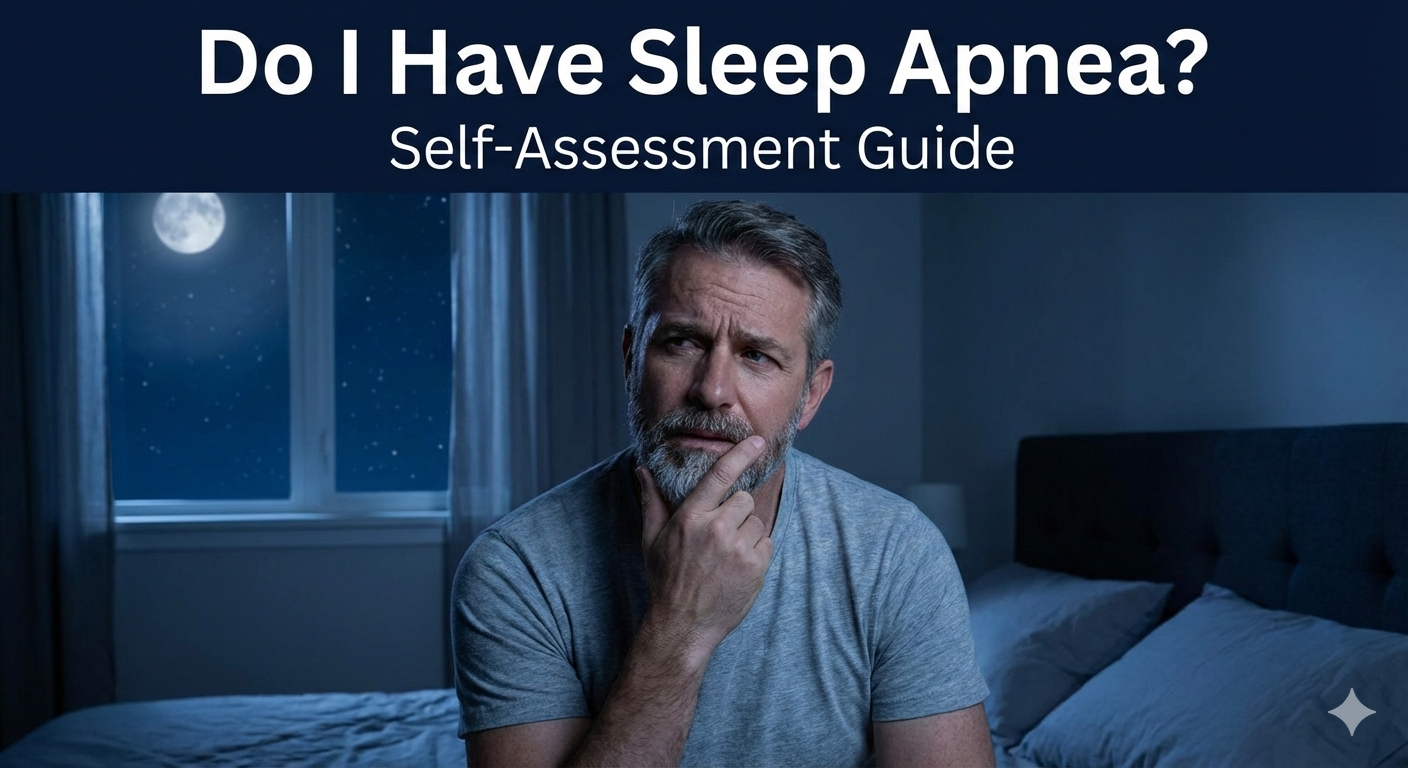
Do I Have Sleep Apnea? A Self-Assessment Guide
Many people in Calgary live with undiagnosed sleep apnea, assuming their tiredness or snoring is “normal” or just part of getting older. Yet untreated obstructive sleep apnea (OSA) can affect your heart health, mood, weight, and quality of life.
This self-assessment guide is designed to help you recognize common warning signs, understand your risk, and know when to seek a professional sleep apnea assessment in Calgary. Using these questions and checklists does not replace a diagnosis, but it can be a powerful first step toward better sleep and safer, more effective treatment.
Common Sleep Apnea Symptoms
If you are asking “Do I have sleep apnea?”, start by looking closely at your nighttime symptoms and how you feel during the day. The more of these you recognize, the more important it is to book a sleep apnea assessment:
Loud or chronic snoring that happens most nights and may bother a bed partner.
Pauses in breathing during sleep, often noticed by someone watching you.
Waking up gasping, choking, or snorting, as if you are catching your breath.
Morning headaches, dry mouth, or a sore throat when you wake up.
Daytime sleepiness and fatigue, even after what seems like a full night’s sleep.
Difficulty concentrating, memory lapses, or feeling “foggy” during the day.
If you checked off several of these, you may be experiencing obstructive sleep apnea rather than simple snoring, and a Calgary sleep apnea clinic can help you confirm what is going on with a proper evaluation.
Risk Factors to Consider
Symptoms tell part of the story; your risk factors help fill in the rest. Certain traits and health conditions make sleep apnea more likely:
Overweight or obesity, which can narrow the airway with extra soft tissue around the neck.
Large neck circumference, especially over about 17 inches in men or 16 inches in women.
Family history of sleep apnea or loud snoring in close relatives.
Age over 40, when airway muscle tone and tissue support naturally decrease.
Anatomical differences in jaw position, tongue size, or airway shape that reduce space for airflow.
Alcohol or sedative use in the evening, which relaxes airway muscles and increases the chance of collapse during sleep.
Even if you are younger, active, or not overweight, you can still have sleep apnea if your airway anatomy is more prone to collapse. That is why combining symptom awareness with a professional sleep study is so valuable.
What to Do If You Suspect Sleep Apnea
If this self-assessment raises red flags, there are clear steps you can take right away to move from guessing to knowing:
Track your sleep and symptoms
Keep a simple log of your bedtime, wake time, and how often you wake at night.
Ask a partner or family member if they notice loud snoring, gasping, or breathing pauses.
Consult a sleep specialist or airway-focused clinic in Calgary
A qualified provider can review your symptoms, examine your airway, and order an at-home or in-lab sleep study if needed.
Many patients start with a dentist-led sleep apnea clinic when they are interested in options beyond CPAP.
Explore sleep apnea treatment options
CPAP therapy, which uses gentle air pressure to keep the airway open, remains a first-line option for many patients.
Oral appliance therapy from a Calgary provider offers a non-invasive, travel-friendly alternative for people with mild to moderate OSA or CPAP intolerance.
Airway-focused therapies, such as myofunctional therapy, address muscle tone and functional breathing patterns to support longer-term improvement.
Taking these steps helps you move from “Do I have sleep apnea?” to a clear diagnosis and a personalized plan for better sleep and health.
How BreatheWell Sleep Can Help
At BreatheWell Sleep & Airway in Calgary, the focus is on sleep apnea treatment without CPAP whenever appropriate, using comfortable, dentist-guided solutions for adults who want a different approach.
Services include:
Oral Appliance Therapy
A custom-fitted sleep apnea mouthpiece (often called a snoring mouthguard but generally known as an Oral Appliance) gently repositions your lower jaw and tongue to prevent airway collapse while you sleep. It is compact, quiet, easy to travel with, and a proven alternative for many patients who struggle with CPAP.Myofunctional Therapy
Guided exercises help strengthen the tongue, lips, and airway muscles to support healthier nasal breathing and a more stable airway at night. This functional approach can complement your oral appliance or other sleep apnea treatments.Comprehensive Assessment and Personalized Plan
BreatheWell evaluates your symptoms, airway structure, and lifestyle to recommend the right combination of therapies.
For patients searching “sleep apnea clinic Calgary” or “sleep apnea treatment without CPAP,” this kind of multi-layered care can be an excellent fit.
Book Your Sleep Apnea Assessment
If this self-assessment sounds familiar, waiting will not make sleep apnea go away on its own. Addressing it now can protect your heart, brain, and energy for years to come.
👉 Book a sleep apnea assessment at BreatheWell Sleep in Calgary today to find out whether a custom oral appliance and/or another airway-focused therapy is right for you.