

What Happens If Sleep Apnea Is Left Untreated?
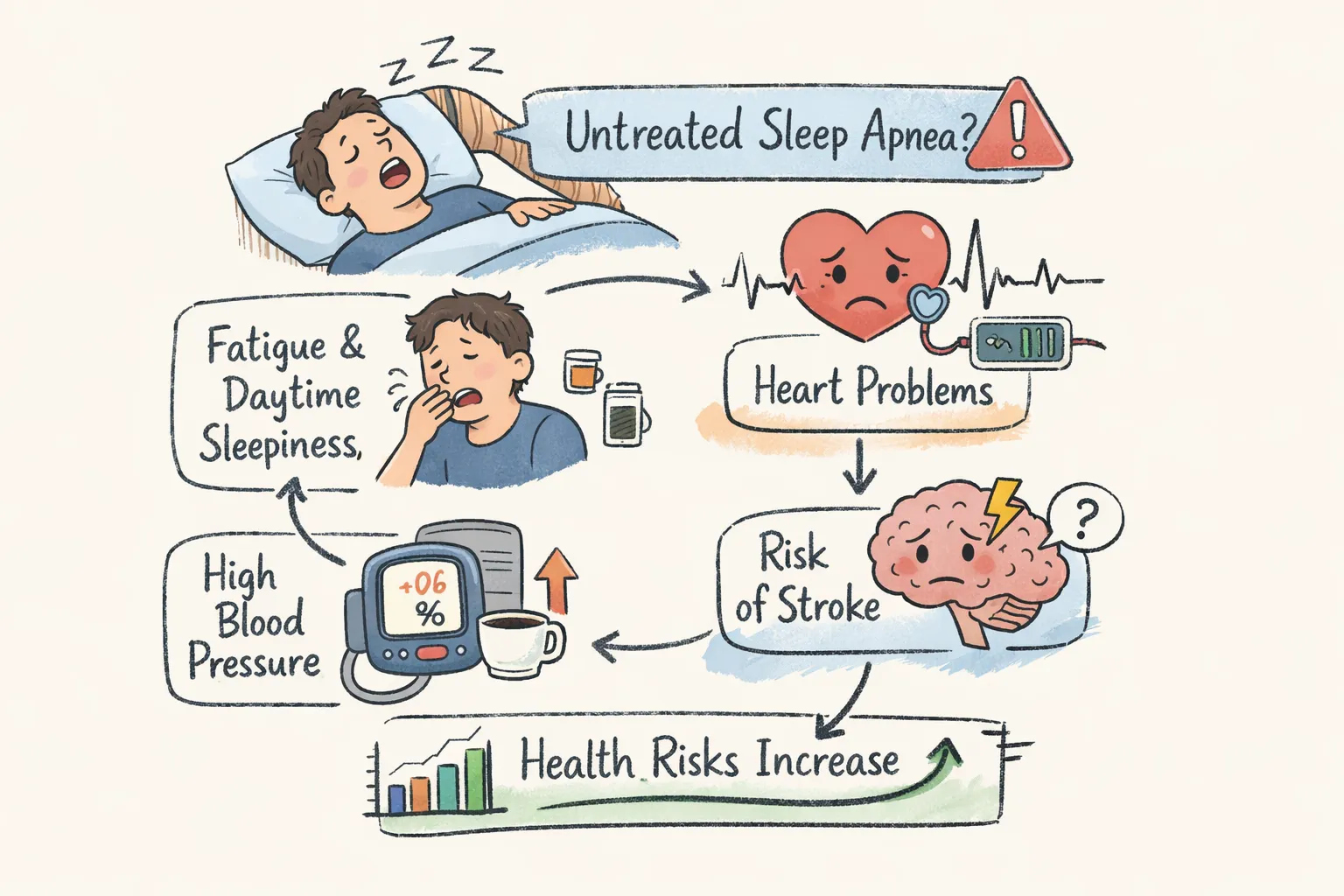
Sleep apnea is more than just snoring—it’s a condition that can quietly affect your energy, focus, and long-term health.
If left untreated, sleep apnea can lead to serious consequences, both in the short term and over time. The good news? With the right treatment—especially comfortable options like oral appliance therapy—you can take control of your sleep and your health.
Quick Takeaways
Untreated sleep apnea can cause daytime fatigue, poor focus, and mood changes, increasing your risk of accidents at work or while driving
Over time, it can raise your risk of high blood pressure, heart disease, stroke, and irregular heart rhythms
It may also contribute to weight gain, diabetes, memory issues, anxiety, and depression
The more severe the sleep apnea, the greater the health risks
Early diagnosis and treatment—especially with comfortable options like oral appliances—can significantly improve your quality of life
The Short Answer: Why Treatment Matters
When sleep apnea goes untreated, your body repeatedly experiences drops in oxygen and interrupted sleep throughout the night.
This can lead to:
Feeling exhausted, even after a full night in bed
Trouble concentrating or remembering things
Increased strain on your heart and blood vessels
Some symptoms show up quickly—like fatigue and brain fog—while others develop gradually, including serious cardiovascular and metabolic conditions.
Early Warning Signs You Shouldn’t Ignore
Sleep apnea often goes undiagnosed because symptoms can feel “normal” or easy to dismiss.
Watch for:
Loud, persistent snoring
Gasping or choking during sleep
Waking up tired or with headaches
Daytime sleepiness or low energy
Difficulty concentrating
👉 If you’re unsure, start with this quick guide
What Happens to Your Body Over Time
1. Increased Risk of Heart Problems
Untreated sleep apnea puts repeated stress on your cardiovascular system.
Over time, this can increase your risk of:
High blood pressure
Atrial fibrillation (irregular heartbeat)
Heart attack
Stroke
The more severe the sleep apnea, the higher the risk.
2. Weight Gain and Metabolic Issues
Sleep apnea can disrupt hormones that control hunger and metabolism.
This can lead to:
Weight gain
Increased insulin resistance
Higher risk of type 2 diabetes
👉 Learn more about this connection here:
3. Brain Fog, Mood Changes, and Mental Health Effects
Poor sleep quality affects how your brain functions.
Many people with untreated sleep apnea experience:
Memory problems
Difficulty focusing
Irritability or mood swings
Anxiety or depression
4. Higher Risk of Accidents
Daytime sleepiness isn’t just frustrating—it can be dangerous.
Sleep apnea is linked to:
Slower reaction times
Microsleeps (brief, involuntary sleep episodes)
Increased risk of car and workplace accidents
Why These Problems Happen
During sleep apnea episodes:
Your airway collapses
Your oxygen levels drop
Your brain briefly wakes you up to restart breathing
This cycle can repeat dozens or even hundreds of times per night.
Over time, this leads to:
Chronic stress on your body
Inflammation
Increased strain on your heart and brain
Treatment Matters—But It Needs to Be Comfortable
Many people delay treatment because they’ve heard about CPAP and feel it’s uncomfortable or hard to use.
While CPAP can be effective, it’s not the only option—and not the right fit for everyone.
A Comfortable Alternative: Oral Appliance Therapy
For many patients, oral appliance therapy offers a simpler, more comfortable way to treat sleep apnea.
These are custom-made devices (similar to a mouthguard) that:
Gently reposition your jaw
Keep your airway open during sleep
Reduce snoring and breathing interruptions
Why patients choose oral appliances:
Small, quiet, and easy to travel with
No mask, hose, or machine
Comfortable and easy to wear
High compliance—people actually use them consistently
For mild to moderate sleep apnea—and even for some severe cases—oral appliances can be an effective, long-term solution.
The Key: Treat Sleep Apnea Early
The earlier you treat sleep apnea, the better your outcomes.
With proper care, many people experience:
Better sleep quality
More energy during the day
Improved focus and mood
Reduced long-term health risks
What Your Next Steps Should Be
If you suspect sleep apnea:
Start with a quick self-assessment
Get a proper diagnosis (often with a simple home sleep test)
Explore treatment options—including oral appliance therapy
Follow up to track your progress and results
Final Thoughts
Untreated sleep apnea doesn’t just affect your nights—it impacts your entire life and long-term health.
But here’s the important part:
👉 You have options—and they don’t have to be uncomfortable.
With modern treatments like oral appliance therapy, it’s easier than ever to take control of your sleep and feel like yourself again.
Ready to Sleep Better?
If you’re dealing with snoring, fatigue, or suspect sleep apnea, getting the right diagnosis is the first step.
👉 Book your sleep apnea consultation in Calgary today and take the first step toward better sleep and better health: