

Does Smoking Increase Sleep Apnea? 5 Key Findings
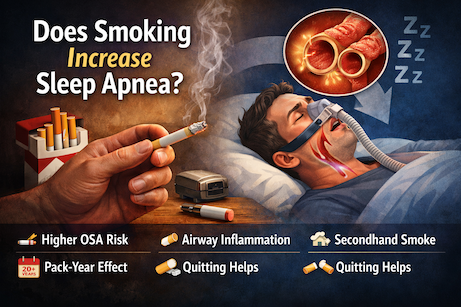
If you smoke—or used to—you might be wondering: Is this affecting my sleep?
The short answer is yes. Smoking is linked to a higher risk of obstructive sleep apnea (OSA)—a condition where your breathing repeatedly pauses during sleep.
Studies show that smokers are more likely to develop sleep apnea than non-smokers, and the risk increases the longer and more heavily someone has smoked.
But what does that actually mean for your health and daily life? Let’s walk through it in a clear, simple way.
How Smoking Affects Your Risk of Sleep Apnea
Research suggests that people who currently smoke may have 20% to nearly 90% higher odds of having sleep apnea compared to those who never smoked.
That doesn’t mean smoking is the only cause—but it’s an important risk factor, especially when combined with:
Weight gain
Aging
Airway anatomy
Family history
The more you smoke, the higher your risk
It’s not just whether you smoke—it’s how much and how long.
People with a longer smoking history tend to:
Experience more breathing interruptions at night
Be more likely to develop moderate to severe sleep apnea
Why Smoking Makes Breathing Worse at Night
Smoking affects your airway and sleep in several ways:
1. It causes airway inflammation
Cigarette smoke irritates the tissues in your throat, leading to swelling and narrowing of the airway.
When your muscles relax during sleep, that narrowed airway is more likely to collapse, causing snoring and breathing pauses.
2. It weakens your body’s airway reflexes
Your body normally works to keep your airway open while you sleep.
Smoking can dull those protective reflexes over time, making it easier for breathing to become unstable during the night.
3. It disrupts your sleep quality
Nicotine can interfere with your natural sleep cycle.
This can lead to:
Frequent awakenings
Lighter, less restorative sleep
Daytime fatigue and brain fog
Even without sleep apnea, smokers often report poorer sleep overall.
What About Secondhand Smoke?
Secondhand smoke doesn’t just affect adults—it can significantly impact children too.
Kids exposed to smoke at home are more likely to:
Snore regularly
Have breathing pauses during sleep
Experience restless or poor-quality sleep
👉 Making your home and car completely smoke-free is one of the most important steps you can take for your family’s health.
Will Quitting Smoking Fix Sleep Apnea?
Quitting smoking is one of the best things you can do for your health—but sleep apnea doesn’t always go away right away.
What improves:
Airway inflammation decreases over time
Overall breathing and heart health improve
Long-term risk goes down
What may not change immediately:
Airway structure may still be narrow
Long-term changes from smoking take time to reverse
Weight gain after quitting can affect breathing
👉 In fact, weight changes after quitting can influence sleep apnea symptoms. Learn more here:
Sleep Apnea and Weight Gain Connection
Signs You Should Get Checked for Sleep Apnea
If you smoke or used to smoke, it’s important to watch for symptoms like:
Loud or frequent snoring
Gasping or choking during sleep
Waking up tired
Morning headaches
Trouble concentrating
Not sure if your symptoms point to sleep apnea?
Take this quick guide:
Do I Have Sleep Apnea? Self-Assessment Guide
Treating Sleep Apnea While You Quit Smoking
You don’t have to wait until you quit smoking to feel better.
Sleep apnea can (and should) be treated at the same time.
Common treatment options include:
CPAP therapy (keeps your airway open during sleep)
Custom oral appliances
Myofunctional therapy (airway exercises)
Treating sleep apnea can help you:
Sleep more deeply
Improve energy and focus
Reduce long-term health risks
Practical Next Steps
Here’s a simple plan you can follow:
Start a structured plan to quit smoking (support + medication if needed)
Get evaluated if you have symptoms of sleep apnea
Begin treatment early to improve your sleep and overall health
Keep your home smoke-free—especially around children
Final Thoughts
So—does smoking increase sleep apnea?
Yes. Smoking raises your risk and can make breathing problems during sleep worse. The effects are stronger with long-term or heavy smoking, and secondhand smoke can impact children as well.
The key takeaway is this:
👉 You don’t have to wait to feel better.
You can improve your sleep now by addressing both smoking and your airway health together.
Ready to Take the Next Step?
If you’re dealing with snoring, fatigue, or suspected sleep apnea, getting the right diagnosis is the first step.
👉 Book your sleep apnea consultation in Calgary today and take the first step toward better sleep and better health: