

What is the 3 % rule for sleep apnea?
Quick Takeaways
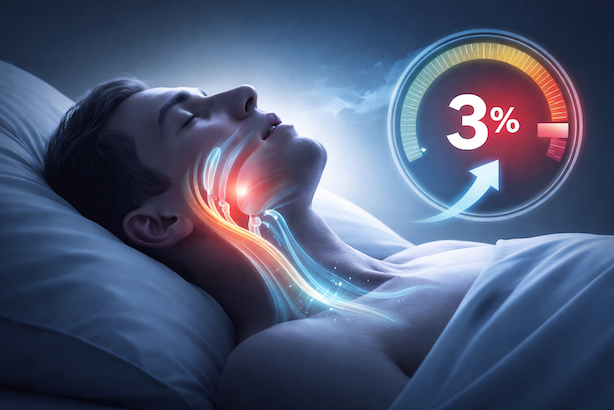
What the 3 % rule is: A hypopnea is scored when airflow drops by ≥ 30 % for at least 10 seconds and either blood‑oxygen saturation falls by ≥ 3 % or an arousal occurs. This inclusive definition captures smaller breathing disruptions than the older 4 % rule.
Why it matters: Using the 3 % rule boosts diagnostic yield—studies show it identifies an extra 12.5 % to 63 % of people with obstructive sleep apnea, especially women and those with mild to severe disease.
Health implications: Mild desaturations and arousal‑based hypopneas still carry risks. Research indicates similar rates of cardiovascular disease under the 3 % and 4 % definitions, and a higher 3 % oxygen desaturation index is linked to hypertension in children.
Access and equity: Strict 4 %‑only criteria can deny care to symptomatic patients. Women are less likely than men to meet the 4 % rule, and public insurers in Canada/US often still rely on it.
Alberta guidelines: The provincial clinical pathway defines oxygen desaturation index using a ≥ 3 % drop and classifies severity as normal (< 5 events/h), mild (5–14), moderate (15–29) and severe (≥ 30).
What BreatheWell does: Calgary’s BreatheWell Sleep & Airway Clinic adopts the 3 % rule and includes arousal‑based scoring for more accurate diagnosis. Their holistic approach means early detection and tailored treatment options, from home sleep tests to dental sleep appliances
Introduction
Obstructive sleep apnea (OSA) is a common yet under‑diagnosed breathing disorder. In OSA the airway repeatedly collapses during sleep, causing apneas (complete pauses) or hypopneas (partial obstructions). These interruptions lead to fragmented sleep and drops in blood‑oxygen saturation. According to the Government of Canada, only about 3 % of Canadian adults report being diagnosed with sleep apnea, yet more than one in four adults (26 %) are at high risk because they snore, are obese, or have other risk factors. Men and people over 50 are particularly affected. Untreated OSA raises the risk of hypertension, heart disease, diabetes and stroke.
BreatheWell Sleep & Airway is an airway and sleep apnea clinic in Calgary, Alberta. Our philosophy is “Breathe Well, Sleep Well, Be Well!” We provide holistic care that goes beyond symptom‑based dentistry to address airway and sleep disorders at their root
This article explains the 3 % rule for scoring hypopneas, why it matters for OSA diagnosis and treatment, and how following current guidelines can help Calgarians get proper care.
How hypopneas are scored
What is a hypopnea?
A hypopnea is a partial closure of the airway during sleep. The American Academy of Sleep Medicine (AASM) defines a hypopnea as a ≥ 30 % reduction in airflow lasting at least 10 seconds. Unlike apneas, hypopneas allow some air to pass, but the event still disrupts sleep and lowers blood‑oxygen levels. Hypopneas are included when calculating the Apnea–Hypopnea Index (AHI), a key metric used to diagnose OSA.
The 3 % rule (AASM 1A criteria)
In February 2023 the AASM updated its scoring manual and made the 3 % rule the recommended standard for hypopnea scoring. Under this rule, a hypopnea is counted if both of the following conditions occur:
Airflow reduction of at least 30 % lasting ≥ 10 s.
Either a drop in blood‑oxygen saturation of ≥ 3 % or an electroencephalographic (EEG) arousal. Arousal‑based scoring is important because some hypopneas cause cortical arousals without large desaturations.
These criteria are sometimes called the “3 % or arousal rule.” The AASM clarifies that hypopneas should be scored when there is a ≥ 30 % reduction in signal for ≥ 10 s with ≥ 3 % oxygen desaturation or an arousal. The rule was created to capture more subtle breathing disruptions that still fragment sleep and impact health. AASM guidance emphasizes that laboratories should use the 3 % rule for accreditation and should include arousal‑based scoring because failure to do so may miss 30–40 % of OSA cases.
The 4 % rule (AASM 1B/CMS criteria)
The 4 % rule requires the same 30 % airflow reduction for ≥ 10 s but only counts a hypopnea when there is a ≥ 4 % drop in oxygen saturation. The Centres for Medicare & Medicaid Services (CMS) and some insurers still accept only the 4 % definition when determining eligibility for treatment. This stricter threshold reduces the number of events counted, meaning some patients with mild‑to‑moderate OSA may not qualify for therapy. The 4 % rule omits arousals and thus misses hypopneas that cause fragmented sleep without large desaturations.
Why the 3 % rule matters
Capturing more mild and moderate OSA
The 3 % rule broadens the definition of hypopneas and significantly increases the diagnostic yield of OSA:
A 2018 cross‑sectional study of 1,400 veterans re‑scored polysomnography data using both definitions. Applying the ≥ 3 % desaturation or arousal definition captured an additional 12.5 % of OSA diagnoses (175 patients). These newly diagnosed patients were symptomatic and similar in daytime sleepiness to those identified with the 4 % definition.
A scoping review focusing on women found that using the 3 % criterion increased OSA diagnosis rates by 12.8 % to 63 % and improved detection of moderate‑to‑severe OSA.
In the Sleep Heart Health Study, 3 % or arousal scoring diagnosed OSA in 2,247 of 3,326 participants who would otherwise have been classified as not having OSA under the 4 % rule. These misclassified individuals ranged from mild to severe OSA and would have been denied treatment.
A large cohort study examining sex and race found that there were no racial disparities in meeting the 3 % rule but women were less likely to meet the 4 % rule than men, suggesting the stricter criterion disproportionately excludes female patients.
Links to cardiovascular and metabolic health
Opponents of the 3 % rule historically argued that milder desaturations might not carry the same health risks, but recent research refutes this:
An editorial reviewing the Sleep Heart Health Study reports that a 3 % desaturation definition yields the same rates of cardiovascular disease (CVD) and coronary heart disease (CHD) as the 4 % rule. The study showed that denying treatment under the 4 % rule could worsen cardiovascular outcomes.
A study analysing pediatric OSA found that a higher 3 % oxygen desaturation index (ODI3) was an independent risk factor for hypertension in children. Children with hypertension had higher AHI and ODI3 values than normotensive peers.
Another Sleep Heart Health Study sub‑analysis looked at subjective sleepiness. Participants with OSA defined only by the 3 % or arousal rule (but not by the 4 % rule) had higher Epworth Sleepiness Scale scores than those without OSA, indicating that these patients experience clinically significant sleepiness. The study concluded that using the 4 % definition alone fails to identify a significant number of sleepy patients who need treatment.
The AASM’s 2018 position statement emphasised that arousal‑based scoring is crucial because skipping arousals may miss 30–40 % of clinically relevant hypopneas.
Ethical and access considerations
The divergence between AASM and CMS creates an ethical dilemma for providers. A 2024 commentary in Journal of Clinical Sleep Medicine noted that the AASM now mandates the 3 % rule (1A) for accreditation, while CMS still pays for therapy only when hypopneas meet the 4 % definition. This dual standard forces clinicians to score studies twice and potentially deny care to patients with public insurance, undermining beneficence and fairness. The article argues that raising the threshold by just 1 % reduces the number of positive tests and denies treatment to symptomatic patients.
How OSA severity is classified
The severity of OSA is usually based on the Apnea‑Hypopnea Index (AHI) or the Oxygen Desaturation Index (ODI). Alberta’s provincial clinical pathway notes that the ODI counts the number of times per hour that oxygen saturation drops by ≥ 3 % (some devices use ≥ 4 %), and that severity categories for AHI/ODI are: < 5 events/h (normal), 5–14 (mild), 15–29 (moderate) and ≥ 30 (severe). Using a 3 % threshold therefore increases AHI/ODI and may shift patients from “normal” into mild or moderate categories, making them eligible for treatment.
Implications for Calgarians
Recognising symptoms
Common symptoms of sleep apnea include loud snoring, witnessed pauses in breathing, gasping or choking during sleep, morning headaches, dry mouth, excessive daytime sleepiness, difficulty concentrating and mood changes. Because many people with OSA do not fit the stereotype of the overweight male, women and younger individuals often go undiagnosed. Local data from the Government of Canada suggest that 26 % of adults are at high risk for OSA, so anyone experiencing these symptoms should seek an evaluation.
How BreatheWell uses the 3 % rule
At BreatheWell’s Calgary clinic, practitioners adopt the AASM’s 3 % rule and include arousal‑based scoring to ensure accurate and early diagnosis. The clinic’s holistic approach focuses on treating airway collapse rather than just masking symptoms
Services include home sleep testing, dental sleep appliances, myofunctional therapy, craniofacial modification, and breathing re-education. By following the 3 % rule, the clinic can identify mild to severe OSA that might otherwise be missed and intervene before health complications arise. Patients are invited to schedule an assessment.
Local benefits
Following the 3 % rule benefits Calgarians by:
Improving diagnosis – capturing more mild and moderate cases means more people receive treatment before serious complications develop.
Supporting cardiovascular health – studies show that 3 %‑defined hypopneas carry similar cardiovascular risks as 4 % events and that treatment reduces hypertension and arrhythmias.
Promoting equity – using the inclusive rule reduces disparities; women are less likely to qualify under the 4 % rule.
Meeting provincial guidance – Alberta’s clinical pathway measures ODI based on ≥ 3 % drops in oxygen saturation, aligning local practice with AASM recommendations.
Conclusion
The 3 % rule for sleep apnea states that a hypopnea is scored when airflow decreases by at least 30 % for 10 seconds and is accompanied by either a ≥ 3 % drop in blood‑oxygen saturation or an EEG arousal. This inclusive definition ensures that patients experiencing subtle breathing disturbances are not overlooked. Research shows that applying the 3 % rule identifies many more patients—especially women and those with mild OSA—without sacrificing cardiovascular risk prediction. Conversely, the older 4 % rule misses patients who nonetheless experience sleepiness, hypertension and other complications.
BreatheWell Sleep & Airway in Calgary embraces the 3 % rule and AASM’s latest guidance to provide accurate diagnosis and holistic treatment. Residents of Calgary and southern Alberta experiencing sleep apnea symptoms are encouraged to get assessed. Early detection and treatment can help you breathe well, sleep well and be well!