
Snoring and Mouth Breathing: Causes & Treatment in Calgary
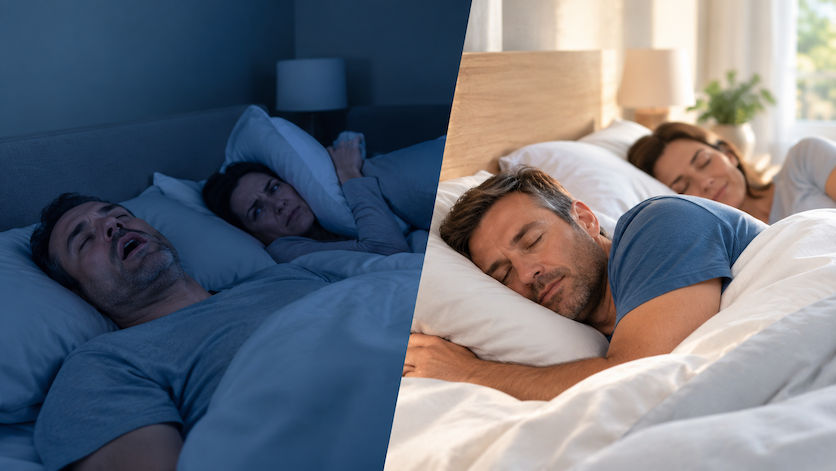
You wake up with a dry mouth. Your partner says you snored again. Or you notice your child sleeping with their mouth wide open. These aren't separate problems. Snoring and mouth breathing are often two sides of the same issue, and the good news is that breathing habits can be retrained.
Quick Takeaways
Mouth breathing makes snoring more likely. When your mouth falls open, your jaw and tongue drop back and narrow your airway.
Nasal breathing is how your body is designed to breathe at night. It filters, warms, and humidifies air and supports a more stable airway.
Mouth breathing is a habit as much as a symptom, and habits can be retrained with breathing re-education.
Kids who mouth-breathe deserve a closer look, since breathing patterns can affect jaw and facial development.
When sleep apnea is involved, oral appliance therapy is one proven option for mild to severe obstructive sleep apnea.
Help is close by at BreatheWell Sleep and Airway in SW Calgary.
Quick Self-Check: Are You a Night-Time Mouth Breather?
You may be mouth breathing while you sleep if you:
Wake up with a dry mouth, sore throat, or bad breath
Snore, or have been told you snore
Wake up tired even after a full night in bed
Often have a stuffy nose, or breathe through your mouth during the day too
Drool on your pillow
Clench or grind your teeth at night
Two or more checks? It's worth looking into.
The Snoring Cycle, Step by Step
Here's how mouth breathing and snoring feed each other:
Your mouth falls open during sleep. This often happens when your nose feels blocked or out of habit.
Your jaw and tongue drop back. Without the tongue resting against the roof of your mouth, it slides toward your throat.
Your airway narrows. Air has to squeeze through a smaller space.
Soft tissues vibrate. That vibration is the sound of snoring.
Sleep gets lighter and more broken. You wake up tired, and the pattern repeats the next night.
In some people, the airway doesn't just narrow. It collapses for seconds at a time. That's obstructive sleep apnea, and it needs proper diagnosis and treatment.
Why Nasal Breathing Matters
Your nose isn't just a passage for air. It filters dust and allergens, warms and humidifies each breath, and helps keep your tongue and jaw in a better position. Breathing through your nose at night supports quieter, deeper sleep.
Mouth breathing skips all of that. It dries out your mouth and throat, which can also affect your gums and teeth over time.
Fixing It at the Source: Breathing Re-Education
Many snoring products quiet the noise without changing how you breathe. Breathing re-education works on the habit itself. It's a non-invasive, long-term approach to support your airway rather than mask symptoms.
At BreatheWell, breathing re-education includes:
A breathing assessment of how you breathe at rest and during activity, including nasal versus mouth breathing
Guided training with exercises to restore nasal breathing, rhythm, and control
Posture and awareness strategies you can practise at home
Follow-up visits to track progress and adjust your plan
Breathing re-education is often paired with myofunctional therapy, which strengthens the tongue, lips, and airway muscles. If a tight tongue is keeping the tongue low, tongue tie release may also be part of the plan.
Mouth Breathing in Children: Why Early Matters
Children who breathe through their mouths often snore, sleep restlessly, or seem tired during the day. Because their faces and jaws are still growing, breathing habits can affect how the upper jaw and airway develop.
If you notice your child sleeping with their mouth open, snoring regularly, or grinding their teeth, a craniofacial evaluation can show whether jaw shape, tongue posture, or airway size is involved. Breathing re-education can then help build healthy nasal breathing habits early.
Where Oral Appliance Therapy Fits In
Sometimes snoring is a sign of obstructive sleep apnea. If a sleep study confirms it, oral appliance therapy is one solution for adults with mild to severe obstructive sleep apnea.
A custom oral appliance fits over your teeth like a mouthguard and gently holds your lower jaw forward. That keeps your tongue from falling back and helps keep your airway open. It's quiet, comfortable, and easy to travel with, and it's a popular CPAP alternative.
Many patients get the best results by combining an oral appliance with breathing re-education. The appliance supports the airway at night, while retraining builds better breathing habits around the clock.
Match the Problem to the Solution
What's going on | How we can help |
|---|---|
Mouth-breathing habit, day or night | |
Weak tongue or lip muscles, low tongue posture | |
Restricted tongue movement | |
Loud snoring without sleep apnea | |
Diagnosed mild to severe obstructive sleep apnea | |
Clenching and jaw tension | |
Narrow jaw or airway concerns in kids |
Most people benefit from more than one approach. Dr. Saleema Adatia builds your plan around what's actually causing your snoring.
Ready to Breathe Easier? Visit BreatheWell in SW Calgary
BreatheWell Sleep and Airway is located inside Symmetry Dental at #150, 10601 Southport Road SW, Calgary. We welcome adults and children from across the city, including Southwood, Haysboro, Acadia, Lake Bonavista, and Willow Park. For coverage details, see our cost and insurance page.
Book your breathing assessment: request an appointment online or call (403) 225-4459.
Frequently Asked Questions
Does mouth breathing cause snoring? It's one of the most common contributors. When your mouth opens during sleep, your jaw and tongue drop back and narrow the airway, which makes the soft tissues more likely to vibrate.
How do I know if I breathe through my mouth at night? Common signs include a dry mouth or sore throat in the morning, snoring, drooling, bad breath, and waking up tired. A partner may also notice your mouth open while you sleep.
Can you train yourself to stop mouth breathing? Yes. Breathing re-education uses guided exercises, posture strategies, and at-home practice to help you shift back to nasal breathing, day and night.
Is mouth taping safe for snoring? Mouth taping is popular online, but it doesn't fix the reason you mouth-breathe, and it isn't safe for everyone, especially if your nose is blocked or you may have sleep apnea. Talk to a professional before trying it.
Should I worry if my child snores or breathes through their mouth? It's worth having it checked. Because children are still growing, breathing habits can affect jaw and airway development. A craniofacial evaluation and breathing re-education can help.
Is snoring a sign of sleep apnea? Not always, but loud snoring with gasping, choking, or daytime tiredness can be. A sleep study is the only way to know for sure.
Can an oral appliance help with snoring and sleep apnea? Yes. A custom oral appliance holds the lower jaw forward to keep the airway open. It's an effective option for snoring and for mild to severe obstructive sleep apnea.
Do I need a referral to book at BreatheWell? No referral is required to book. Dentists and physicians can also refer patients through our referrals page.