

Menopause and Sleep Apnea in Women: Understanding the Link and Finding Relief
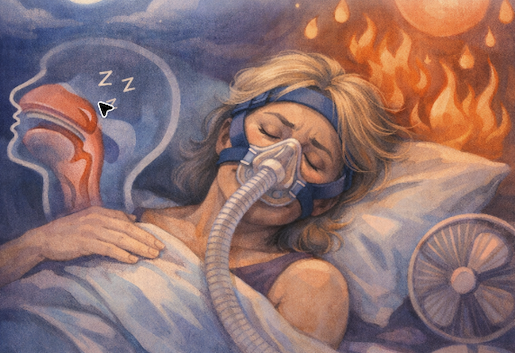
Menopause is a major transition in a woman’s life — and sleep often becomes one of the biggest challenges.
Hot flashes, night sweats, mood changes, and weight gain are common. Many women say they suddenly can’t sleep through the night or wake up feeling exhausted no matter how long they were in bed.
But what many don’t realize is this:
Menopause can significantly increase the risk of obstructive sleep apnea (OSA).
Why Sleep Changes During Menopause
As estrogen and progesterone levels decline:
Airway muscle tone decreases
Breathing drive can weaken
Body fat distribution shifts (often around the neck and abdomen)
Insomnia becomes more common
These changes can make the airway more likely to collapse during sleep.
Before menopause, women have a much lower risk of sleep apnea compared to men. After menopause, that gap narrows significantly.
Hormonal shifts + midlife weight changes = increased airway vulnerability.
What Is Obstructive Sleep Apnea?
Sleep apnea happens when the airway repeatedly collapses during sleep. Breathing stops for short periods, oxygen levels drop, and the brain briefly wakes you to restart breathing.
This cycle can happen dozens of times per hour.
Common signs include:
Snoring
Gasping or choking during sleep
Waking unrefreshed
Morning headaches
Dry mouth
Brain fog
Irritability or mood changes
Daytime fatigue
In women, symptoms are often subtler. Instead of loud snoring, many report:
Insomnia
Anxiety or depression
Fatigue
Frequent nighttime awakenings
Because these overlap with menopause symptoms, sleep apnea is often missed.
Why It Matters
Untreated sleep apnea increases the risk of:
High blood pressure
Heart disease
Insulin resistance
Weight gain
Depression
Memory difficulties
If you’re experiencing menopause and feel like your sleep has dramatically worsened, it’s worth evaluating your breathing.
Sleep Apnea Testing in Calgary
At BreatheWell Sleep & Airway, we help guide patients through proper sleep apnea testing.
Testing may include:
Home sleep apnea testing
Physician-coordinated diagnostic studies
Comprehensive airway assessment
If you’ve been searching for answers or wondering why you can’t sleep at night, proper evaluation is the first step toward relief.
Treatment Options for Women in Menopause
Treatment depends on severity and individual anatomy.
CPAP Therapy
For moderate to severe sleep apnea, CPAP remains highly effective. However, many women struggle with mask comfort and long-term use.
Oral Appliance Therapy
For mild to moderate cases — or for women who cannot tolerate CPAP — a custom mandibular advancement device for sleep apnea can be an excellent alternative.
This custom sleep apnea mouthpiece:
Gently repositions the lower jaw
Keeps the airway open
Reduces snoring
Is small and portable
Is often easier to tolerate long-term
At BreatheWell Sleep & Airway, we provide customized, professionally fitted oral appliances — not over-the-counter devices — and ensure proper follow-up for effectiveness.
Myofunctional Therapy
Strengthening airway muscles and improving nasal breathing can provide additional support — especially during hormonal transitions.
Lifestyle Support
Weight management, reducing alcohol, improving sleep posture, and supporting nasal breathing can all improve outcomes.
When to Seek Help
If you are in perimenopause or post-menopause and experiencing:
Worsening fatigue
Insomnia that doesn’t improve
Snoring that started later in life
Morning headaches
Mood changes that feel sleep-related
It’s worth evaluating your airway.
Menopause may trigger sleep disruption — but breathing issues can make it much worse.
Final Thoughts
Menopause does not mean you have to accept chronic exhaustion.
Sleep apnea in women is under diagnosed — especially during midlife hormonal changes. With proper testing and personalized treatment, restful sleep is absolutely possible.
If you’re in Calgary and struggling with menopause-related sleep issues, BreatheWell Sleep & Airway can help you identify the root cause and find a solution that fits your life.
Better sleep isn’t just about comfort — it protects your long-term health.