

How Much Does It Cost to Fix a Tongue‑Tie? A Calgary Guide

Key Takeaways
Tongue‑tie basics: Ankyloglossia is a congenital restriction of the lingual frenulum that limits tongue movement. Clinicians classify tongue‑ties into four types – Types I and II anchor near the tip of the tongue while Types III and IV restrict deeper posterior movement.
Cost: A frenectomy performed in a doctor’s or dentist’s office typically costs around CAD $700, while surgeries under general anesthesia can be a lot more. Laser procedures for newborns generally range CAD $600 –$900.
Healing timeline: Infants usually heal quickly; most can breastfeed immediately after release and the surgical site appears nearly normal within about two weeks.
Potential complications if untreated: Restricted tongue mobility can contribute to feeding difficulties and impaired swallowing that raises risk of aspiration. Poor tongue clearance may lead to oral hygiene problems, tooth decay and chronic bad breath. Babies and children may experience gagging, choking or reflux, while adults may suffer from headaches or migraines.
The low‑resting tongue can affect palate development, resulting in overbite, underbite or other malocclusions, and speech issues such as lisps or difficulty articulating certain sounds.
Why act early: Early assessment and treatment—paired with myofunctional therapy and airway evaluation—can improve feeding, speech and sleep quality. Clinics like BreatheWell Sleep & Airway in Calgary offer integrated care, from laser frenectomy to oral appliances and sleep‑apnea management, helping patients “breathe well, sleep well and be well.”
Most parents in Calgary who call our team at BreatheWell Sleep & Airway are not only looking for relief from snoring and sleepless nights – they’re also worried about whether a tongue‑tie could be affecting their child’s feeding, speech or even their own breathing.
A tongue‑tie (medically called ankyloglossia) happens when the strip of tissue under the tongue (the lingual frenulum) is too short or tight. In newborns this restriction can make latching and breastfeeding painful. In children and adults it can lead to speech issues, mouth breathing and even contribute to obstructive sleep apnea.
This article answers the common question “how much does it cost to fix a tongue‑tie?” while explaining what a tongue‑tie is, how it’s classified and why proper treatment matters for your sleep and overall health.
What Is Tongue‑Tie?
In a healthy mouth the tongue is free to move up, down and side‑to‑side. When the lingual frenulum is too short the tongue can’t lift properly to the roof of the mouth. MyHealth Alberta explains that tongue‑tie is a problem present at birth; some babies never notice it, but others have trouble latching and sucking while breastfeeding. The restricted motion can also lead to gaps between the lower front teeth and speech problems.
Tongue‑Tie Grading System
Clinicians use grading systems to describe how severe a tongue‑tie is:
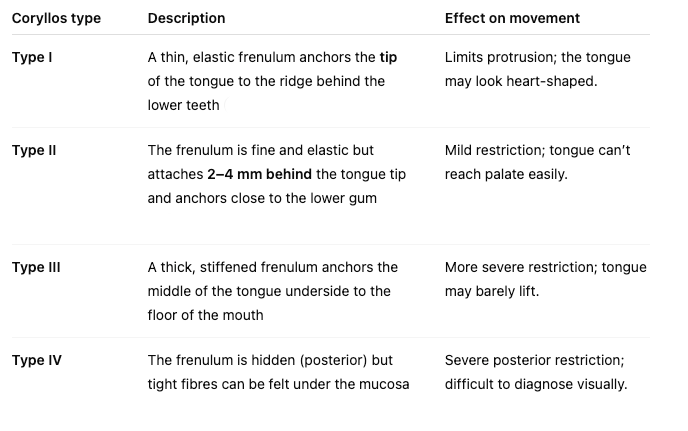
A thorough evaluation also considers how well the tongue can move; tools like the Hazelbaker assessment or TRMR (Tongue Range‑of‑Motion Ratio) score measure function.
How Much Does Tongue‑Tie Treatment Cost?
A frenectomy or frenotomy is the procedure to release a tongue‑tie. The cost of a frenectomy varies widely: an office‑based procedure typically costs around CAD $700, while hospital‑based surgeries under general anaesthesia are an option for complicated cases. Most families never require hospital care; infants can often have the frenulum released in a dental or medical office without sedation.
Factors affecting cost
Pricing comes down to several factors:
Patient age and complexity – infants generally require less time and no sedation, whereas adults may need local anaesthetic or additional soft‑tissue surgery.
Treatment setting – office procedures are less expensive; surgical centre fees add facility charges and anaesthesiologist fees.
Surgical technique – laser frenectomies heal quickly and reduce bleeding but may cost more because of advanced equipment and training.
Follow‑up care – post‑operative myofunctional therapy and stretching exercises help prevent scar tissue and reattachment.
Insurance coverage – when a frenectomy is medically necessary (for feeding, speech, oral hygiene or airway issues), medical or dental insurance often covers all or part of the cost.
Cost considerations in Calgary
BreatheWell Sleep & Airway is a dental sleep clinic, not a general dental practice. We use state‑of‑the‑art laser technology for our tongue tie release, and we are the only clinic in Calgary with this technology.
Our focus is on airway health, myofunctional therapy and sleep medicine. Fees in Calgary vary depending on the provider’s experience and technology, but for an office‑based laser frenectomy you can expect a range similar to the figures above.
Most cases at our clinic are performed without anesthesia, which keeps costs down. We are happy to provide an estimate during your consultation and guide you on insurance reimbursement. If the tongue‑tie is part of a broader airway or sleep disorder, some extended health benefit plans may cover evaluation and treatment at our sleep clinic in Calgary.
What to Expect During Newborn Tongue‑Tie Healing
Many parents worry about the recovery process. The good news is that healing is usually quick:
Infants can often breastfeed immediately after a frenectomy; the site may develop a white patch as it heals and looks almost normal within two weeks.
Older children may need to avoid crunchy or hot foods for a few days, but most are back to normal within a couple of weeks.
Post‑operative stretches help prevent the wound from reattaching. Parents may need to run a clean finger under the tongue several times a day for the first week and gradually reduce the frequency.
At BreatheWell we incorporate myofunctional therapy into care plans. This program strengthens tongue posture, swallowing and breathing patterns to support healing and avoid relapse. Our clinicians also work closely with lactation consultants for newborns, so that breastfeeding improves quickly and gently.
Can Tongue‑Tie Cause Other Problems?
Tongue‑tie doesn’t only affect feeding. Untreated restrictions can influence oral health, facial development and even sleep. Below are some commonly asked questions.
Can tongue‑tie cause aspiration or choking?
Restricted tongue mobility can make swallowing difficult. Impaired swallowing and dysphagia increase the risk of choking and aspiration. When infants struggle to coordinate their suck‑swallow‑breathe cycle, milk may flow too quickly toward the airway. This is one reason why early assessment and release can be important.
Can tongue‑tie cause bad breath or dental issues?
Yes. When the tongue cannot reach the back teeth or clean debris from the mouth, food particles remain. Older children with untreated tongue‑tie may have difficulty brushing effectively, leading to tooth decay, gum disease and chronic bad breath (halitosis). Poor oral hygiene also raises the risk of cavities and misaligned teeth.
Can tongue‑tie cause gagging or reflux?
Infants with tongue‑tie often swallow excess air because they have difficulty creating a seal. Gagging, choking, and reflux are common issues during feeding. Children transitioning to solids may gag or spit food out due to limited tongue lateralization.
Can tongue‑tie cause migraines or headaches?
In adults, a restricted tongue can alter posture and strain muscles in the jaw, neck and shoulders. Many adults with undiagnosed tongue‑tie experience chronic jaw pain, TMJ dysfunction, head and neck tension, and headaches or migraines. Releasing the tie and retraining the tongue often alleviates these symptoms.
Can tongue‑tie cause an underbite or other orthodontic issues?
The tongue shapes the palate and influences tooth alignment. When the tongue rests low in the mouth it fails to widen the palate, resulting in a high, narrow palate and misaligned teeth, including overbite or underbite. Persistent tongue thrust and mouth breathing can also contribute to malocclusion. An underdeveloped palate narrows the airway, which may increase snoring and sleep apnea.
Does tongue‑tie cause a lisp or other speech problems?
Speech involves precise tongue placement. People with tongue‑tie often experience lisps, slurred speech or difficulty articulating sounds such as “s,” “r,” “l” and “t”. lisping and distortions of /s/ are common in children with tethered oral tissues. Speech therapy and myofunctional exercises after a frenectomy can help correct these patterns.
Why Treat Tongue‑Tie at BreatheWell Sleep & Airway in Calgary?
While some children adapt to their tongue‑tie, untreated restrictions can affect breathing and sleep quality. A low‑resting tongue encourages mouth breathing, which contributes to snoring and obstructive sleep apnea. Our clinic treats both sleep apnea and orofacial myofunctional disorders.
Here’s how we integrate care:
Comprehensive airway evaluation – We assess tongue function, palate shape and nasal breathing. If you or your child can’t sleep, snore loudly or wake feeling unrefreshed, a tongue‑tie may be part of the puzzle. Our team may recommend a sleep study to identify underlying airway obstruction.
Oral appliance therapy – For adults with sleep apnea or habitual snoring, we fit custom sleep apnea mouthpieces that reposition the jaw and tongue to keep the airway open. These devices complement frenectomy when a restricted tongue contributes to airway collapse.
Myofunctional therapy – Exercises retrain the tongue and orofacial muscles, improving nasal breathing and head posture. We also address chewing and swallowing patterns for children after a tongue‑tie release.
Advanced technology – Our laser equipment allows us to perform frenectomies quickly with minimal bleeding and discomfort. Most patients nurse or eat right after the procedure and begin healing immediately.
Based in Calgary
BreatheWell Sleep & Airway is located inside Symmetry Dental at #150, 10601 Southport Road SW in Calgary. Our clinic hours (Mon–Fri 8 a.m. – 3 p.m.)
We see infants, children and adults and welcome referrals from lactation consultants, dentists, orthodontists and physicians. If you’re searching for a sleep clinic in Calgary or tongue‑tie release near me, we offer both services under one roof.
Conslusion
A tongue‑tie is more than an inconvenience; left untreated it can affect feeding, speech, oral hygiene, facial development and sleep. In Calgary, the cost of fixing a tongue‑tie is generally similar to U.S. office‑based frenectomy fees approximately $600–$900), depending on case complexity). Healing is quick for newborns and children and may resolve breastfeeding or speech problems within weeks.
If you or your child experiences feeding issues, speech difficulties, chronic headaches, gagging or sleep problems, schedule a consultation at BreatheWell Sleep & Airway. We’ll evaluate tongue function, provide transparent pricing and create a plan that may include laser frenectomy, myofunctional therapy, oral appliances and collaboration with local sleep physicians. Our goal is to help Calgary families breathe well, sleep well and be well.